Orpheus and Eurydice: A Journey Through Love and Loss

Orpheus and Eurydice is the most famous love story in Greek mythology. Orpheus, the greatest musician who ever lived — son of Apollo and the Muse Calliope — descends into the underworld to bring back his wife Eurydice, who died from a snakebite on their wedding day. His music moves Hades and Persephone to tears. They agree to release Eurydice on one condition: Orpheus must walk out without looking back at her until they reach the surface. He looks back. She vanishes forever. The myth is the original story about grief, the impossibility of undoing loss, and how love and fear can make us destroy the very thing we’re trying to save.

Key Facts

  • Orpheus: Thracian poet-musician, son of Apollo (or the river god Oeagrus) and Calliope, chief of the Muses
  • Eurydice: A wood nymph (or mortal woman, depending on the source); Orpheus’s wife
  • Eurydice’s death: Snakebite while fleeing through a meadow, on or shortly after her wedding day
  • The condition: Walk out of the underworld without looking back. Orpheus fails.
  • Orpheus’s death: Torn apart by Maenads (Dionysus’s followers). His head continued singing.
  • Major sources: Virgil (Georgics Book 4), Ovid (Metamorphoses Books 10-11), Apollonius (Argonautica)
  • Cultural legacy: Monteverdi’s L’Orfeo (1607, first great opera), Gluck’s Orfeo ed Euridice, Cocteau’s Orphée, Hadestown, the phrase “Orphic mysteries”

The myth of Orpheus and Eurydice wrecks me every time.

Is the Eurydice in Antigone the Same as Orpheus’s Wife?

No. The Eurydice in Antigone is Creon’s wife and Haemon’s mother, not Orpheus’s wife. Orpheus’s Eurydice dies from a snakebite; the queen in Antigone belongs to the tragedy of Creon’s family in Thebes. Same name, different woman, different story.

Back to Orpheus and his wife.

Not because it’s tragic — Greek mythology is full of tragedy, and most of it feels like cosmic machinery grinding people up. What gets me about Orpheus is that he almost made it. He did everything right. He played music so beautiful it made the god of death cry. He got the impossible deal. He was walking out of the underworld with his dead wife behind him, steps from the sunlight, and then — in one moment of doubt, or love, or fear, or weakness — he turned around. And she was gone. Forever.

That “almost” is what makes it one of the most retold stories in Western civilization. Three thousand years and counting. Opera, film, theater, poetry, video games. People keep coming back to it because it describes something we all recognize: the moment when you have the thing you want most and you ruin it — not because you’re careless, but because you care too much.

Let me go through the real myth, the ancient sources, why Orpheus looked back (there are several theories, and they contradict each other), and what the story has meant to the artists who keep retelling it.


Who Was Orpheus?

Before the love story, there’s the musician.

Orpheus was Thracian — from the wild northern region that the Greeks considered the edge of civilization. His father was either Apollo (god of music, poetry, and light) or Oeagrus (a Thracian river king). His mother was Calliope, the Muse of epic poetry and chief of all nine Muses. Either way, his parentage made him essentially the most artistically gifted being in the Greek world — the child of music and poetry given human form.

And his talent was not figurative. In Greek mythology, Orpheus’s music had literal physical power. When he played the lyre (a gift from Apollo, or in some versions, one he made himself), the world rearranged itself around him. Trees uprooted themselves and walked toward him. Rivers changed their courses to hear him better. Wild animals — wolves, bears, lions — lay down beside rabbits and deer, the predator instinct suspended. Rocks wept.

This wasn’t metaphor for the Greeks. Orpheus’s music was a force of nature, the same way a storm is a force of nature. It didn’t persuade. It compelled.

The Argonaut Voyage

Before the Eurydice story, Orpheus was famous for sailing with Jason and the Argonauts on the quest for the Golden Fleece. Apollonius of Rhodes, in the Argonautica, describes Orpheus’s role on the ship. His most important moment comes when the Argo passes the island of the Sirens — the creatures whose singing lured sailors to their deaths.

Odysseus, in a later myth, would deal with the Sirens by having his crew plug their ears with wax. Orpheus’s solution was more elegant: he just played louder. He played over them. He out-sang creatures whose entire power was their song. The crew never heard the Sirens at all. That’s the level of musician we’re talking about.


The Love Story and the Descent

Orpheus married Eurydice — described variously as a wood nymph, a daughter of Apollo, or simply a mortal woman from Thrace. The sources don’t agree on her origin, which is telling. Eurydice exists in the myth almost entirely through Orpheus’s love for her. We know very little about who she was as a person. More on that later, because modern retellings are fixing this.

The Death

In Virgil’s Georgics (Book 4), Eurydice is fleeing through a meadow from Aristaeus, a beekeeper and minor deity who is pursuing her. Running along the riverbank, she steps on a venomous snake hidden in the tall grass. The bite kills her almost instantly. Some versions place this on their wedding day. Others shortly after.

Ovid’s Metamorphoses (Book 10) is simpler: Eurydice is walking through a field with her friends — the Naiads, freshwater nymphs — when the snake strikes. No Aristaeus, no pursuit. Just a bride in a meadow and a random, senseless death. That version might be worse, honestly. At least in Virgil’s there’s a cause. In Ovid’s it’s just bad luck.

The Descent into the Underworld

Orpheus, consumed by grief, did what no living person was supposed to do: he walked down to the underworld to ask for his wife back.

The journey itself is significant. A katabasis — a descent to the land of the dead — is one of the most powerful narrative structures in Greek mythology. Only a handful of heroes ever attempted it: Odysseus, Heracles, Theseus, Aeneas. But Orpheus didn’t go with a sword or divine armor. He went with a lyre. His only weapon was his music, and it was enough.

Ovid’s description of what happened when Orpheus played in the underworld is one of the most extraordinary passages in Latin poetry. His music was so beautiful that:

Tantalus stopped reaching for the water that always receded. Ixion’s wheel stopped spinning for the first time in eternity. The vultures stopped eating Tityos’s liver. The Danaids paused in their endless water-carrying. Even Sisyphus — the man condemned to push a boulder uphill forever — sat down on his rock and listened.

Think about that. Orpheus’s music was so powerful it temporarily suspended the most severe punishments the gods had ever devised. The entire machinery of eternal suffering ground to a halt because one man was singing about how much he missed his wife.

And then Hades wept. The god of death, who had never shown emotion in any myth, wept.

The Deal

Hades and Persephone agreed to release Eurydice. One condition: Orpheus must walk ahead of her, out of the underworld, back toward the light, and he must not look back at her until they have both reached the surface. If he turns around before she’s fully in the upper world, she goes back to the dead. Permanently.

It seems simple. It’s the hardest thing anyone has ever been asked to do.


Why Did He Look Back?

This is the question the myth was built around, and the ancient sources don’t agree.

Virgil says it was love. “A sudden madness seized the unwary lover” (subita incautum dementia cepit amantem). It’s involuntary — madness, not choice. Orpheus is so overwhelmed by longing that he forgets the condition, just for a second. One second of feeling too much, and it’s over.

Ovid gives a different psychology. In his version, Orpheus looks back because he’s afraid Eurydice isn’t really there — afraid she’s fallen behind, afraid she’s too weak, afraid the whole deal was a trick. It’s not love that makes him turn. It’s anxiety. The inability to trust that the good thing is actually happening.

Plato, in the Symposium, is the harshest. He suggests the gods showed Orpheus only a phantom of Eurydice, not the real woman, as punishment for his cowardice. Orpheus went to the underworld with a lyre instead of dying for love, which Plato considered the inferior choice. Alcestis, who actually died to save her husband Admetus, was the real hero in Plato’s telling. Orpheus just played music. He wasn’t willing to pay the real price.

These three interpretations have been argued about for twenty-five centuries, and I don’t think any of them is wrong. They’re three different readings of the same human moment.

Virgil’s Orpheus loved too much. Ovid’s Orpheus feared too much. Plato’s Orpheus didn’t love enough. Pick the one that hurts most. That’s probably the truest version for you.


After: Orpheus’s Death and the Singing Head

After losing Eurydice for the second time, Orpheus wandered Thrace in grief. He refused the company of all women. Some sources say he turned to the love of young men instead — Ovid makes this claim explicitly, and some scholars read Orpheus as one of the earliest mythological figures associated with same-sex love in the Greek canon.

His death is one of the most vivid and disturbing scenes in Greek mythology. The Maenads — the ecstatic female followers of Dionysus — attacked him. The reasons vary. In some versions, Dionysus was angry that Orpheus had turned away from him and worshipped only Apollo. In others, the Maenads themselves were enraged that Orpheus refused their advances. In Ovid’s version, one Maenad screams “Here is the man who scorns us!” and throws a stone at him — but even the stone is charmed by his music and falls harmlessly at his feet. So they drowned out his playing with their screaming, and then they tore him apart.

I look at Orpheus, Dionysus and Bulgaria together in this lesser-known Greek myths post.

His severed head, still singing, floated down the river Hebrus to the sea, and eventually washed ashore on the island of Lesbos — which the Greeks said was why Lesbos became the greatest center of lyric poetry in the ancient world. His lyre was placed among the stars as the constellation Lyra.

In some versions, his shade finally rejoined Eurydice in the underworld. Ovid gives them this: walking together in the Elysian Fields, sometimes Orpheus ahead, sometimes Eurydice, and this time he can look back at her whenever he wants. It’s the gentlest ending Ovid ever wrote.


Underworld Descents in Greek Mythology: How Orpheus Compares

Hero Reason for Descent Weapon / Method Outcome
Orpheus Retrieve Eurydice Music Moved Hades to tears. Failed at the last moment.
Odysseus Consult the prophet Tiresias Ritual sacrifice, Circe’s instructions Succeeded. Didn’t fully enter — spoke to shades at the border.
Heracles Capture Cerberus (12th Labor) Brute strength Succeeded. Wrestled Cerberus with bare hands.
Theseus Help Pirithous kidnap Persephone Arrogance Trapped on the Chair of Forgetfulness. Rescued by Heracles.
Aeneas See his dead father Anchises The Golden Bough, guided by the Sibyl Succeeded. Saw the future of Rome. Left through the Gate of Ivory (false dreams).

What makes Orpheus’s descent unique is the weapon. Everyone else brings force, magic, or divine protection. Orpheus brings art. And it works — better than any of the others, arguably. He doesn’t just survive the underworld. He makes it weep. The tragedy is that his art is enough to move the gods but not enough to overcome his own human weakness.


Orpheus in Modern Culture

Orpheus has been adapted more times than possibly any other Greek myth. A quick tour through the most important ones:

Opera. Claudio Monteverdi’s L’Orfeo (1607) is considered the first great opera ever written. The Orpheus myth essentially invented opera — a story about the power of music was the natural subject for the new art form that combined music, drama, and spectacle. Gluck’s Orfeo ed Euridice (1762) revised the myth with a happy ending, which became the standard for 18th-century opera.

Film. Jean Cocteau’s Orphée (1950) is one of the great art films of the 20th century — a surrealist retelling set in postwar Paris where Death is a beautiful woman in a Rolls-Royce. Marcel Camus’s Black Orpheus (Orfeu Negro, 1959) transplants the myth to Rio de Janeiro during Carnival and won the Palme d’Or at Cannes.

Theater. Sarah Ruhl’s Eurydice (2003) is one of the most important retellings because it tells the story from Eurydice’s perspective — the first major version to give her interiority, agency, and a voice. Suddenly Eurydice isn’t just the object Orpheus is trying to recover. She’s a person making her own decisions about whether she even wants to go back. Anaïs Mitchell’s Hadestown (2019 Tony Award for Best Musical) sets the myth in a Depression-era industrial hellscape, with Hades as a tyrannical boss and Persephone as his unhappy wife.

Literature. Rilke’s Sonnets to Orpheus (1922) treats Orpheus as the archetype of the poet — the one who moves between the living and dead worlds through language. Salman Rushdie’s The Ground Beneath Her Feet (1999) reimagines Orpheus as a rock musician.

Games. Hades (2020) features Orpheus as a character in the House of Hades, where he sings melancholy songs about losing Eurydice. The game lets you reunite them — one of the most emotionally satisfying side quests in the whole game.


My Take: Why He Had to Look Back

I’ve read every version of this myth I can find, and I keep coming back to one thought: he was always going to look back.

The condition Hades set isn’t a test of obedience. It’s a test of what kind of person you are. And the kind of person who loves someone enough to walk into the underworld for them is exactly the kind of person who can’t walk away from them without looking.

That’s the cruelty of the deal, and I think the Greeks understood it perfectly. Hades didn’t offer a fair test. He offered a trap designed for Orpheus specifically — the same way Sisyphus’s boulder is designed for Sisyphus. Your greatest strength is the thing that destroys you. Orpheus’s capacity for love is what took him to the underworld, and his capacity for love is what made him look back.

There’s also something about the myth that I think resonates now more than ever: the idea that you can’t undo loss by going backward. Every version of the story, across three thousand years of retelling, arrives at the same conclusion. You can’t bring the dead back. You can’t return to the way things were. The only direction is forward, in the dark, trusting something you can’t see.

And sometimes — most times — the thing you lost stays lost. The myth doesn’t promise a happy ending. It promises that love was real, that the music was real, and that the attempt was worth making even though it failed. If that’s not enough… well, the Greeks never said mythology was comforting. They said it was true.


More Greek myths: the Greek gods and goddesses, the myth of Sisyphus, and Eros and Psyche.

Orpheus, in a novel

My novel Orpheum is set in Bulgaria, where Orpheus is said to have gone down into the underworld to bring back his love. “I always knew music was powerful. I didn’t know it could kill.”

Read Orpheum on Amazon

Frequently Asked Questions

Why did Orpheus look back?

The ancient sources give different reasons. Virgil says love — “a sudden madness seized him.” Ovid says fear — he’s afraid she’s not really there. Plato says cowardice — the gods punished him for not dying for love. The ambiguity is the point. The myth invites you to decide what kind of failing it was.

What is the myth of Orpheus and Eurydice about?

A musician goes to the underworld to bring back his dead wife. His music moves Hades to tears. The deal: walk out without looking back. He looks back. She’s gone forever. At its core, it’s about grief, the impossibility of undoing loss, and how love can make us destroy what we’re trying to save.

How did Eurydice die?

Snakebite. In Virgil, she was fleeing from Aristaeus through a meadow and stepped on a venomous snake. In Ovid, she was simply walking with friends when it struck. The randomness of the death is part of the myth’s power — there’s no enemy to blame, no lesson to learn. Just terrible luck.

How did Orpheus die?

Torn apart by Maenads — Dionysus’s frenzied followers. They were enraged that he refused all women after losing Eurydice (or that he worshipped Apollo over Dionysus). His severed head floated down the river Hebrus, still singing, to the island of Lesbos. His lyre was placed in the stars as the constellation Lyra.

Was Orpheus a real person?

Probably not historically, but the ancient Greeks treated him as semi-historical — a Thracian poet-priest who lived before Homer. He was credited with founding the Orphic mystery religion, which taught reincarnation and influenced Plato, Pythagoras, and early Christianity. The mystery cult was very real and lasted centuries.

What could Orpheus’s music do?

Everything. Trees uprooted themselves to follow him. Rivers changed course. Wild animals lay down peacefully beside each other. He outsang the Sirens during the Argonaut voyage. In the underworld, his music stopped Tantalus’s suffering, halted Ixion’s wheel, made Sisyphus sit down on his boulder, and made Hades weep for the first time ever.


Sources & Further Reading

Virgil, Georgics, Book 4 (the most emotionally devastating version). Ovid, Metamorphoses, Books 10-11 (the most complete narrative). Apollonius of Rhodes, Argonautica (Orpheus on the Argo). Plato, Symposium (the harsh reading). Apollodorus, Bibliotheca. W.K.C. Guthrie, Orpheus and Greek Religion (the scholarly standard). Fritz Graf and Sarah Iles Johnston, Ritual Texts for the Afterlife: Orpheus and the Bacchic Gold Tablets.

If you want just one thing, read Ovid’s version in the Metamorphoses — it’s short, it’s gorgeous, and the ending will stay with you. If you want a modern retelling, see Hadestown or read Sarah Ruhl’s Eurydice.

Prometheus: The Fire Thief

The Titan who paid forever for defying the gods.

Tarot Cards: Complete Guide

The Lovers, The Moon, The World — mythology in the cards.

The Myth of Sisyphus: Why Being Damned Forever Made Him Happy


Sisyphus was a king of Corinth in Greek mythology, condemned by Zeus to roll an enormous boulder up a hill in the underworld for eternity. Every time he nears the top, the boulder rolls back down, and he must start again. He earned this punishment by cheating death twice — first by chaining Thanatos (Death personified) so that no one on Earth could die, then by tricking Persephone into letting him return to the living world. The myth has become one of the most referenced stories in Western culture, giving us the word “Sisyphean” for any endless, futile task, and serving as the foundation of Albert Camus’s philosophy of the absurd.

Key Facts

  • Name: Sisyphus (Greek: Σίσυφος, Sísyphos)
  • Title: King and founder of Corinth (originally called Ephyra)
  • Parents: Aeolus (king of Thessaly) and Enarete
  • Wife: Merope, one of the Pleiades — the only sister to marry a mortal
  • Famous for: Cheating death twice; eternal punishment of rolling a boulder uphill
  • Punishment by: Zeus, for hubris and defiance of the gods
  • Key trait: Metis — cunning intelligence. Called “the craftiest of men” by Homer.
  • Cultural legacy: “Sisyphean” entered English as an adjective for any futile, endless task. Camus’s 1942 essay made Sisyphus the symbol of the absurd human condition.

When I think about Sisyphus, the first thing that comes to mind isn’t the boulder. It’s the walk back down.

Everyone knows the image — a man pushing a massive rock up a hill for eternity, watching it roll back down, starting over, forever. It’s one of the most famous punishments in all of mythology. But the part that actually gets to me is the moment between: when the boulder has already tumbled and Sisyphus is walking back to the bottom, alone, knowing exactly what’s going to happen, and doing it anyway. That’s the human condition in a single frame.

Most people know Sisyphus as “the boulder guy” or as a Camus reference. But the actual Greek myth is way more interesting than its reputation. Sisyphus wasn’t just some poor soul who offended Zeus. He was a brilliant, devious king who cheated death twice — literally trapping the god of death in chains, then conning his way out of the underworld after he did finally die. The Greeks called him the craftiest man alive. Homer used the word kerdistos — “most profit-minded” — which is basically ancient Greek for “this guy will scam you.”

Let me walk you through the real myth, why the Greeks told it, what Camus did with it, and why a three-thousand-year-old story about a king with a rock still hits so hard.


Who Was Sisyphus? The Myth Before the Boulder

Before he was eternal-punishment guy, Sisyphus was a king. And not a minor one.

According to the standard genealogy, Sisyphus was the son of Aeolus — not the wind god from the Odyssey, but the king of Thessaly, who was himself the son of Hellen (the mythological ancestor of all Greeks). His mother was Enarete. His brothers included Athamas (whose story with the golden ram leads to Jason and the Argonauts) and Salmoneus — and it’s the rivalry with Salmoneus that sets the whole myth in motion.

Sisyphus founded and ruled the city of Ephyra, which later became Corinth — one of the wealthiest and most strategically positioned cities in the ancient Greek world, sitting on the narrow isthmus connecting mainland Greece to the Peloponnese. He didn’t just rule it; he built it. Under his leadership, Corinth became a commercial powerhouse. The Greeks credited him with establishing the Isthmian Games, the athletic competition at Corinth that was second in prestige only to the Olympics at Olympia.

He married Merope, one of the seven Pleiades — daughters of the Titan Atlas. She was the only one of the seven sisters to marry a mortal man instead of a god, which is why, according to the myth, her star in the Pleiades cluster is the faintest. She was ashamed. I always found that detail heartbreaking — she chose a human, and the sky dimmed her for it.

Sisyphus and Merope had several sons, most notably Glaucus, who fathered Bellerophon — the hero who tamed Pegasus and killed the Chimera. So the craftiest king in Greek mythology is the grandfather of one of the greatest monster-slayers. That’s not nothing.

But there’s a darker genealogical thread. Some ancient sources — Sophocles in Philoctetes, and the later mythographer Hyginus — claim that Sisyphus secretly fathered Odysseus through an affair with Anticleia before she married Laertes. If true, that means the craftiest king in Greek mythology is the father of the craftiest hero. The apple didn’t just not fall far from the tree — the apple was the tree.

The Feud with Salmoneus

Sisyphus hated his brother Salmoneus, king of Elis. The reasons vary by source — some say Salmoneus stole his kingdom, others that the brothers simply despised each other from birth. Sisyphus consulted the oracle at Delphi about how to destroy his brother. The oracle’s answer: father children with Salmoneus’s daughter, Tyro, and they would grow up to avenge him.

Sisyphus seduced (or, in some versions, assaulted) Tyro. She bore him twin sons. But when Tyro discovered the prophecy — that her own children were weapons forged against her father — she killed the babies herself.

This is the kind of myth the Greeks loved. Everyone’s clever. Everyone’s ruthless. And the gods are watching it all with the detached interest of someone watching a chess game between two scorpions.


How Sisyphus Cheated Death — Twice

This is the part of the myth that most people don’t know, and it’s the best part. Sisyphus didn’t just annoy the gods. He broke the fundamental rules of the universe — twice — and nearly got away with it.

The Zeus and Aegina Incident

The trouble started when Zeus abducted the nymph Aegina, daughter of the river god Asopus. Sisyphus saw the whole thing. When Asopus came looking for his daughter, Sisyphus told him exactly where Zeus had taken her — in exchange for a freshwater spring for his city. It was a transactional move, classic Sisyphus: I have information, you have something I want, let’s deal.

Zeus, naturally, was furious. Not because kidnapping a nymph was a problem — it was Tuesday for Zeus — but because a mortal had the audacity to snitch on the king of the gods. Zeus sent Thanatos, the personification of Death, to drag Sisyphus to the underworld.

Trick One: Chaining Death Itself

This is where it gets incredible. When Thanatos arrived to collect Sisyphus, the king talked him into trying on a set of chains. The details vary — in some versions, Sisyphus asks Thanatos to demonstrate how the chains work; in others, he flatters or distracts him — but the result is the same: Sisyphus chained Death.

And because Death was chained, nobody could die. Not the sick, not the wounded, not the dying on battlefields. The entire mortal order ground to a halt. Imagine it — warriors on the battlefield getting hacked apart and just… not dying. The old and suffering unable to find release. The whole system broke.

Ares, the god of war, was the one who finally intervened. War without death is meaningless, and Ares couldn’t have that. He freed Thanatos, restored the natural order, and Sisyphus was handed over to Death immediately.

But Sisyphus had prepared for this.

Trick Two: Conning His Way Out of the Underworld

Before Thanatos came for him, Sisyphus had instructed his wife Merope to not perform any burial rites when he died. No coins on the eyes for Charon. No libations. No offerings. Nothing.

When Sisyphus arrived in the underworld, he went straight to Persephone, queen of the dead, and complained bitterly that his wife had disrespected his body. No proper funeral. No honors. The nerve. He asked Persephone for permission to return to the world of the living — just briefly, just to punish his disrespectful wife and arrange a proper burial.

Persephone agreed. It was a reasonable request, and Sisyphus had framed it perfectly.

Of course, once he was back among the living, Sisyphus had absolutely no intention of returning. He went home, embraced his wife (who had done exactly what he told her), and resumed his life. He reportedly lived for many more years in open defiance of the underworld’s authority.

Eventually, Hermes came for him personally and dragged him back to Hades by force. There was no trick this time. The messenger god wasn’t having it.

I love the audacity of the whole scheme. The first trick — chaining Death — is brute-force genius. The second — manipulating Persephone with a lie he planned in advance while still alive — is several levels of strategic thinking ahead of everyone else in the room. The Greeks didn’t call him kerdistos for nothing.


The Boulder: What the Punishment Actually Means

Once Hermes dragged Sisyphus back to the underworld for good, Zeus imposed the punishment that would make the king immortal in a different way.

Homer describes it in the Odyssey, Book 11, when Odysseus visits the underworld and sees Sisyphus for himself:

“And I saw Sisyphus at his endless task raising his prodigious stone with both his hands. Bracing himself and thrusting with hands and feet he pushed the boulder uphill to the top. But every time, as he was about to send it toppling over the crest, its sheer weight turned it back, and once again towards the plain the pitiless rock came bounding down. So once more he had to wrestle with the thing and push it up, while the sweat poured from his limbs and the dust rose high above his head.”

That’s about 2,700 years old, and it still reads. Homer doesn’t editorialize. He just describes the action: push, almost crest, roll back, start over, sweat, dust. The punishment speaks for itself.

The scene comes from Odysseus’s visit to the underworld; the Odyssey and its epic journey has a page of its own on this site.

But what is the punishment actually about? There are several layers.

The most obvious: futility. Sisyphus is condemned to labor that produces nothing. He works as hard as any living person — harder — and has nothing to show for it. Ever. The rock will never stay at the top. The task has no purpose except to be done, and undone, and done again.

The deeper Greek reading: hubris. Sisyphus’s real crime wasn’t the boulder-worthy offense of chaining Death or cheating his way back to life. His crime was believing he was clever enough to operate outside the system. In Greek theology, moira — fate, destiny, the allotted portion — is inviolable. Even the gods are bound by it. Sisyphus tried to step outside moira, to live on his own terms rather than the universe’s. The punishment is fitting: an eternity of effort that leads nowhere is the cosmic answer to a man who thought he could outrun the cosmic order.

The ironic reading: Sisyphus was defined by his metis — his cunning, his ability to outwit anyone, including gods. The boulder strips all of that away. There is no trick that works on a rock. No scheme, no lie, no flattery, no deal. The one thing Sisyphus was best at — thinking his way out — is the one thing that cannot help him. His intelligence is his identity, and his punishment renders it useless.

That last one is the one that really sticks with me. The Greeks didn’t just punish you. They punished you specifically — with the thing that would hurt you the most. Tantalus, who stole the gods’ food, is trapped with food and water he can never reach. Ixion, who lusted after Hera, is strapped to a burning wheel for eternity. Sisyphus, the great thinker, is given a problem that thinking cannot solve.


The Other Sinners: How Sisyphus Fits in Tartarus

Sisyphus isn’t alone in the underworld. He’s one of several famous mortals condemned to eternal punishment in Tartarus — the deepest pit of Hades, reserved for those who personally offended the gods. The comparison is worth making because it shows what the Greeks considered the worst possible sins.

Sinner Crime Punishment The Cruel Irony
Sisyphus Cheated death, defied Zeus Rolling boulder uphill forever His cunning is useless against a rock
Tantalus Stole ambrosia, served his son to the gods Standing in water that recedes, under fruit that pulls away The thief of divine food can never eat or drink
Ixion Tried to seduce Hera Bound to a flaming wheel spinning forever Passion becomes perpetual agony
Tityos Tried to assault Leto (Zeus’s consort) Liver eaten by vultures daily, regenerating each night Desire becomes perpetual consumption
Danaids Murdered their husbands on their wedding night Filling a leaking jar with water — forever Futile cleansing for a stain that won’t wash

Notice the pattern. Every punishment is personalized. The Greek underworld isn’t generic torture. It’s bespoke. Each sinner is trapped in a loop that specifically mirrors and mocks their defining trait. That’s more psychologically sophisticated than most modern horror movies.


Camus and the Absurd: “One Must Imagine Sisyphus Happy”

In 1942, while France was under Nazi occupation, Albert Camus published Le Mythe de Sisyphe — The Myth of Sisyphus. It’s a philosophical essay, not a retelling of the Greek myth. But it used Sisyphus as the central image for what Camus considered the fundamental question of human existence: is life worth living if it has no inherent meaning?

Camus’s argument, in compressed form: the universe is indifferent. It doesn’t care about us. There is no God, no cosmic plan, no grand narrative that makes suffering worthwhile. This gap between our desperate need for meaning and the universe’s total silence is what Camus called the absurd.

Most philosophy before Camus looked at this problem and tried to solve it — find meaning in God, or reason, or progress, or revolution. Camus refused all of those exits. His position was radical: the absurd cannot be resolved. Don’t try. Don’t hope for an answer. Don’t make one up. Just… keep going.

And that’s where Sisyphus comes in.

“The struggle itself toward the heights is enough to fill a man’s heart. One must imagine Sisyphus happy.”

That last line is one of the most quoted sentences in 20th-century philosophy, and most people get it backwards. They think Camus is saying “find joy in your work” or “stay positive.” That’s self-help, not absurdism. What Camus actually means is more radical than that.

The key moment, for Camus, is the walk back down the hill. Not the pushing. The walk down. That’s when Sisyphus is conscious of his fate — fully aware that the boulder will roll down again, fully aware that his labor is pointless, fully aware that nothing will change. And he walks down anyway. That awareness is his freedom.

If Sisyphus were an animal, mindlessly pushing, the punishment would work perfectly. But because he’s conscious — because he knows — he owns his situation in a way the gods never intended. The punishment is supposed to break him. Instead, his awareness of it is the one thing they can’t take.

Camus wrote this in 1942. Occupied France. The Nazis running Paris. His friends being arrested and killed. The essay is not abstract. It’s a man staring at a world that has gone insane and saying: I see it. I know it’s absurd. I refuse to pretend otherwise. And I’m going to keep going.

That reading changes Sisyphus from a cautionary tale about hubris into something completely different — a story about human dignity in the face of meaninglessness. The Greeks meant it as a warning. Camus turned it into a battle cry.


Sisyphus in Modern Culture

Sisyphus is everywhere once you start looking. The myth has been adapted, referenced, and reimagined across every medium.

Literature. Beyond Camus, Franz Kafka’s work is essentially Sisyphean — characters trapped in bureaucratic loops that can never be resolved. Samuel Beckett’s Waiting for Godot has the same structure: two men doing the same nothing, forever, with full knowledge that it’s nothing. John Barth’s “Night-Sea Journey” reimagines the myth as a sperm cell’s existential crisis on the way to fertilization. David Mitchell’s Cloud Atlas uses nested Sisyphean loops across centuries.

Film and TV. Groundhog Day (1993) is arguably the best Sisyphus adaptation ever made, even though it never mentions the myth. Phil Connors relives the same day thousands of times, learns to push through the futility, and only escapes when he stops trying to escape. The Coen Brothers’ Barton Fink traps a writer in a hotel room where creative work becomes eternal repetition. Edge of Tomorrow (2014) literalizes the loop as a time-travel war mechanic.

Music. The Sisyphus metaphor appears in tracks by Radiohead, Andrew Bird (who released an album literally called Sisyphus with the collaborative project Sisyphus), and countless others. The image of the rock rolling back down is basically a universal songwriting shorthand for “this thing I keep trying and failing to do.”

Games. Hades (2020) by Supergiant Games — one of the best-reviewed games of the decade — literalizes the underworld escape loop. Zagreus, the protagonist, dies repeatedly and returns to the underworld to start over. You actually meet Sisyphus in the game as a friendly, surprisingly cheerful NPC who’s accepted his fate. The game’s Sisyphus embodies the Camus reading perfectly: he’s conscious of the futility, and he’s chosen not to let it destroy him.

The internet. Sisyphus has become one of the most-memed mythological figures alive. The image of a figure pushing a boulder uphill is the universal shorthand for: “this is my life.” Monday mornings. Inbox zero. Loading the dishwasher. Arguing on Twitter. The meme works because the feeling is instantly recognizable — the loop that never ends, the effort that never sticks.


The Ancient Sources: Where the Myth Comes From

The Sisyphus myth is pieced together from multiple ancient sources, none of which tell the complete story on their own.

Homer is the earliest and most authoritative. In the Iliad (Book 6), he references Sisyphus as the grandfather of Bellerophon and calls him “the craftiest of men.” In the Odyssey (Book 11), he gives us the famous boulder scene during Odysseus’s visit to the underworld. Homer doesn’t explain why Sisyphus is being punished — he assumes his audience already knows.

Pseudo-Apollodorus (Bibliotheca, 1st-2nd century CE) provides the most complete narrative, including the chaining of Thanatos, the trick on Persephone, and the genealogical details about Merope and Aeolus.

Pausanias (Description of Greece, 2nd century CE) connects Sisyphus to Corinth’s founding myths and the local cult traditions.

Ovid (Metamorphoses, Book 4) briefly describes the boulder punishment in his account of the underworld.

Hyginus (Fabulae) adds the claim about Sisyphus fathering Odysseus and provides alternative motivations for Zeus’s punishment.

The interesting thing is that no ancient source treats the boulder as the main story. For the Greeks, the boulder was the ending. The story was everything that came before — the cunning, the defiance, the tricks, the family drama. Modern culture has inverted this completely. We remember the punishment and forget the person.

If you want more myths pieced together from their ancient sources, the mythology guides sorted by culture are the place to start.


My Take: Why the Boulder Still Rolls

Here’s what I keep coming back to. The Greeks told the story of Sisyphus as a warning: don’t be too clever, don’t defy the gods, don’t think you’re special. The punishment is supposed to be the moral. Know your place.

But that’s not how anyone reads it anymore. Somewhere between Homer and Camus, the story flipped. The punishment stopped being the point. Sisyphus himself became the point — his refusal to accept the terms, his willingness to fight a fight he can’t win, his consciousness in the face of cosmic indifference.

I think that flip happened because the myth accidentally describes something universally true about being human. Every person alive is pushing a boulder. We eat and get hungry again. We clean and the mess returns. We work toward goals that dissolve the moment we reach them. We love people who will eventually die. The rock always rolls back down.

The question isn’t whether your life is Sisyphean. It is. The question is what you do with that knowledge. The Greek version says: accept it, bow to fate, don’t make trouble. The Camus version says: see it clearly, refuse to despair, and push.

I’ll take the Camus version every time.


More Greek myths: the Greek gods and goddesses, Orpheus and Eurydice, Prometheus and the stolen fire, and the Phoenicians.

Frequently Asked Questions

What is Sisyphus known for?

Sisyphus was a king of Corinth in Greek mythology, famous for being punished by Zeus to roll an enormous boulder up a hill for eternity. Every time he nears the top, it rolls back down. He earned this punishment by cheating death twice — first by trapping Thanatos in chains, then by tricking Persephone into letting him return to the living.

Why was Sisyphus punished?

For his extreme craftiness and defiance of the gods. He chained Thanatos so no one could die, disrupting the natural order. After Ares freed Thanatos and Sisyphus died, he tricked Persephone into letting him return to the living by complaining his wife hadn’t given him proper burial rites. Zeus condemned him to eternal futile labor for his hubris.

What does “Sisyphean” mean?

Sisyphean describes any task that is endless, futile, and self-defeating — work that must be repeated forever without achieving a permanent result. It comes directly from the myth. Common examples: bureaucratic paperwork, inbox zero, dieting, cleaning a house with children. Albert Camus turned the concept into a philosophical framework in his 1942 essay.

Did Sisyphus really outsmart death?

In the myth, yes — twice. First he chained Thanatos, which stopped all death on Earth until Ares intervened. Then after dying, he convinced Persephone to let him return to the living. He refused to go back until Hermes dragged him there by force. The Greeks considered this the ultimate example of metis — cunning intelligence.

What is Camus’s interpretation of Sisyphus?

In his 1942 essay The Myth of Sisyphus, Camus used Sisyphus as the central metaphor for the human condition. Life is absurd — we search for meaning in a universe that offers none — but the proper response is not despair but revolt. His famous conclusion: “One must imagine Sisyphus happy.” The moment of walking back down the hill, fully aware, is where Camus locates human freedom.

Who were Sisyphus’s family members?

Son of Aeolus (king of Thessaly) and Enarete. Married Merope, one of the Pleiades — the only sister to marry a mortal, which is why her star is the faintest. Father of Glaucus, grandfather of Bellerophon (the hero who killed the Chimera). Some myths claim he secretly fathered Odysseus through Anticleia.

Who was Sisyphus’s wife?

Merope, one of the Pleiades and the only one of the seven sisters to marry a mortal. In the myth, Sisyphus told her to perform no burial rites when he died, and that is the lie he later used to talk Persephone into letting him go back to the living.


Sources & Further Reading

Homer, Odyssey, Book 11 (the underworld visit — the original boulder scene). Homer, Iliad, Book 6 (Sisyphus as “craftiest of men”). Pseudo-Apollodorus, Bibliotheca (the complete narrative). Pausanias, Description of Greece (Corinth connections). Ovid, Metamorphoses, Book 4. Hyginus, Fabulae (the Odysseus paternity claim). Albert Camus, The Myth of Sisyphus (1942) — the philosophical essay that changed how everyone reads the myth. Robert Graves, The Greek Myths — accessible compilation of the major sources. Timothy Gantz, Early Greek Myth — rigorous scholarly source-by-source analysis.

If you want just one thing, read Camus’s essay. It’s short, it’s brilliant, and it’ll change how you think about every repetitive thing you do for the rest of your life.

Selkies: Seal-Folk of Celtic Myth

Celtic mythology at its most haunting.

Norse Mythology: Gods and Ragnarok

A whole tradition built on doomed heroes and fate.

Tarot Cards: Complete Guide to Meanings, Spreads and Decks

Quick Answer

Tarot is a 78-card deck split into 22 Major Arcana (universal archetypes, The Fool through The World) and 56 Minor Arcana (four suits covering daily life). Originally Italian card games from the 1430s, they became divination tools in 18th-century France. Today used for self-reflection, meditation, and reading.

Suits: Cups (emotion) · Wands (energy) · Swords (intellect) · Pentacles (material)  |  Best beginner deck: Rider-Waite-Smith (1909)  |  Images: Rider-Waite-Smith deck (1909), public domain

I got into mysticism early and have had enough eerie encounters with tarot decks to say with some certainty that they work, in a spooky way… even if it’s just using the cards to get clarity and self-reflection: your reactions to your reading will betray your inner turmoil and can help make hard decisions.

But I’ve also made *huge* potentially life-altering decisions based on Tarot Deck “Guidance” – convincing myself that all my desires were good and worthwhile because the cards confirmed what I wanted and gave me permission to make poor choices – to be cautious. Still, they’re fun and can even be a powerful tool, whether or not you believe they are powered by subconscious yearnings, active deities or universal wisdom. Plus, they’re super pretty and a great way to get to know people (reading cards, like drawing portraits, requires intimacy). So here’s a detailed guide and a handy meaning and interpretation cheatsheet you can refer to at any time, or even print and download!

Major Arcana Meanings at a Glance

Here is the traditional Rider-Waite-Smith meaning of each of the 22 Major Arcana cards, in deck order. The Minor Arcana are further down, suit by suit, and the picture version of the Major Arcana is in the Tarot Card Meaning & Interpretation section.

CardCore meaning
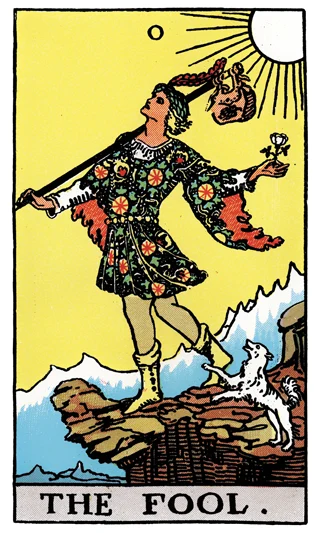
The FoolNew beginnings, innocence, a leap of faith
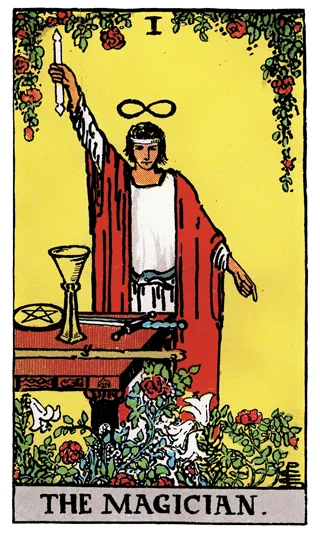
The MagicianWillpower, skill, turning an idea into action
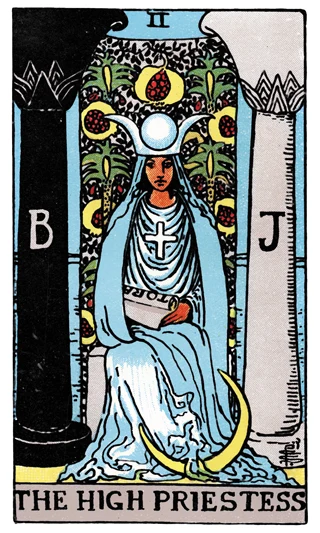
The High PriestessIntuition, secrets, the unconscious
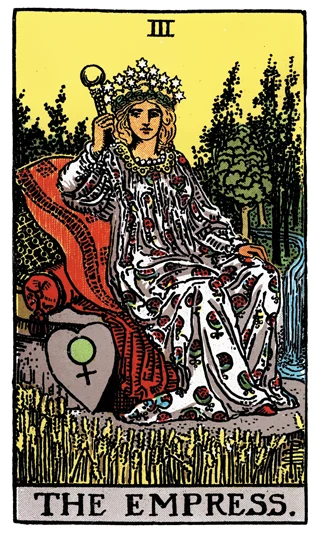
The EmpressNurturing, abundance, creativity
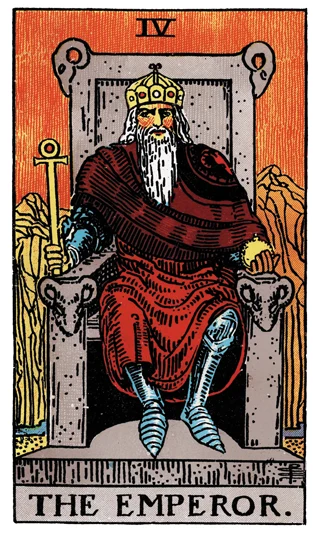
The EmperorAuthority, structure, stability
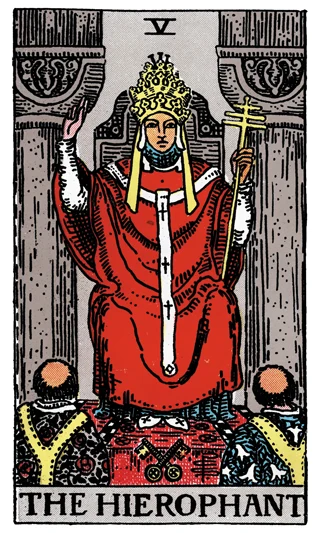
The HierophantTradition, shared beliefs, conformity
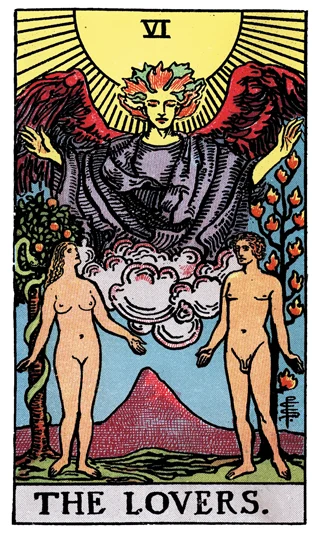
The LoversLove, harmony, a meaningful choice
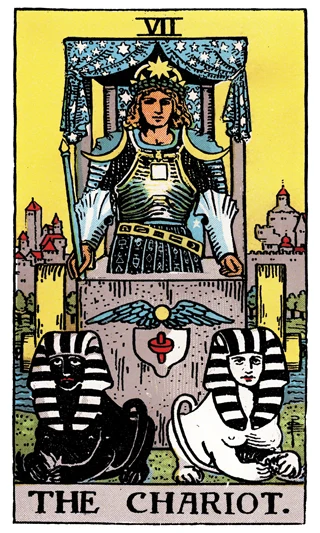
The ChariotDetermination, control, victory through will
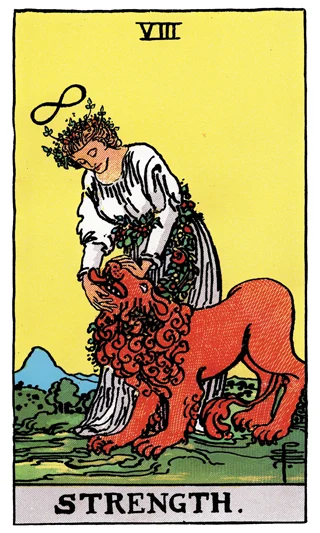
StrengthCourage, inner power, compassion
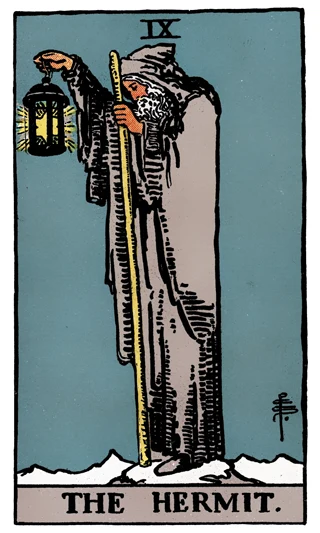
The HermitSolitude, introspection, inner guidance
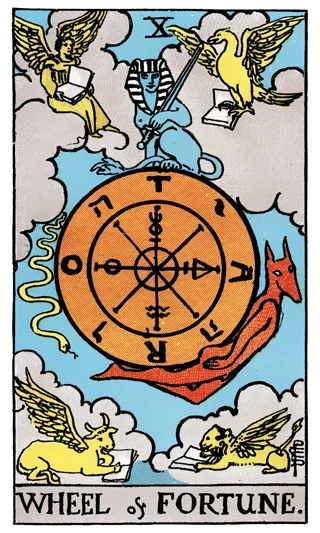
Wheel of FortuneCycles, fate, a turning point
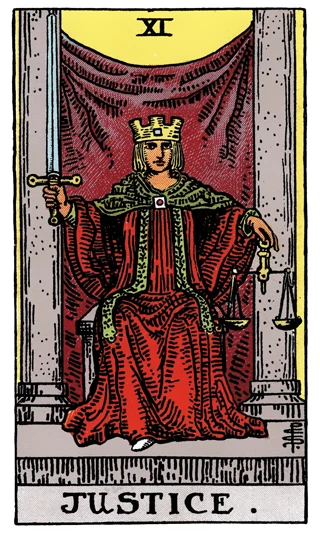
JusticeFairness, truth, cause and effect
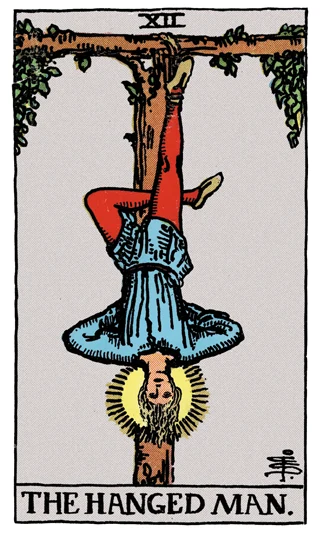
The Hanged ManSurrender, a new perspective, sacrifice
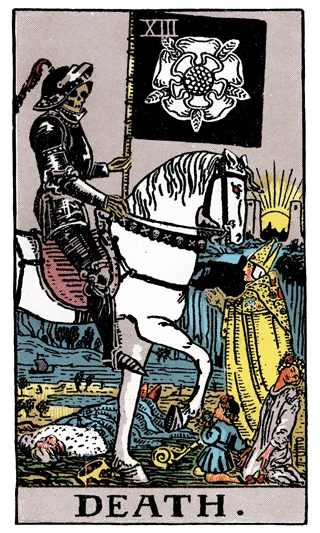
DeathEndings, transformation, change (rarely literal death)
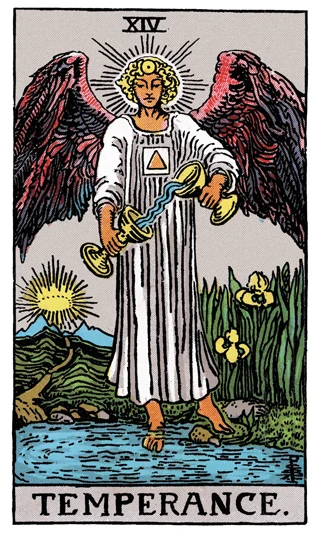
TemperanceBalance, patience, moderation
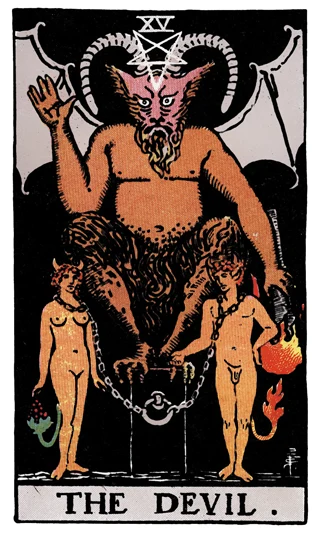
The DevilBondage, addiction, the shadow self
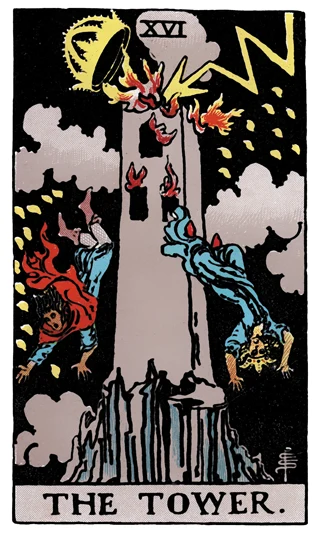
The TowerSudden upheaval, revelation, false structures falling
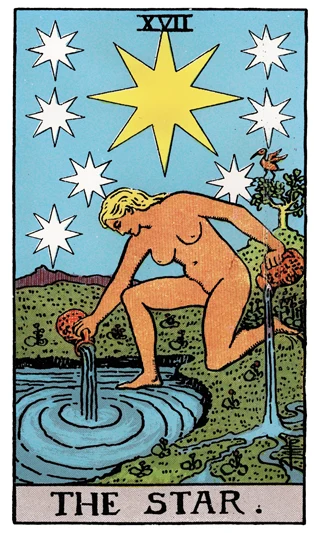
The StarHope, renewal, inspiration
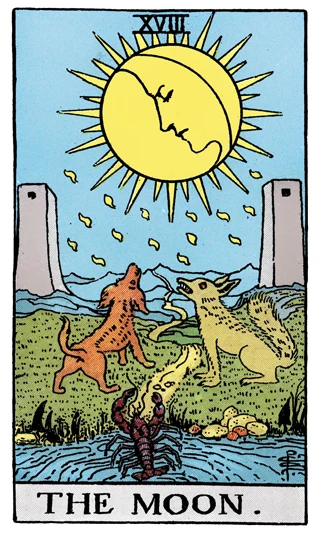
The MoonIllusion, fear, the subconscious
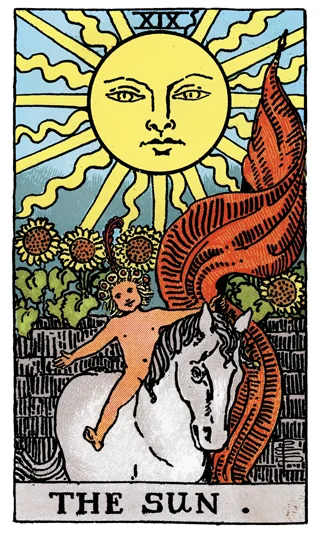
The SunJoy, success, vitality
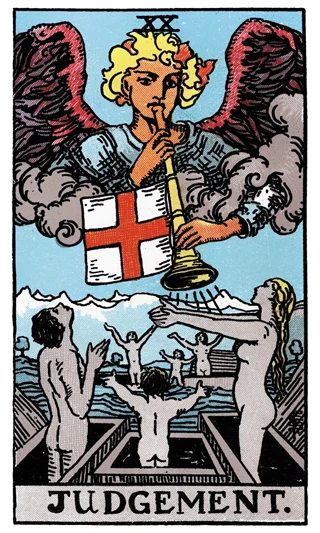
JudgementReflection, reckoning, awakening
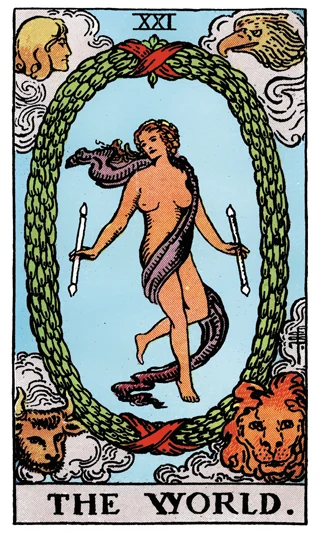
The WorldCompletion, accomplishment, wholeness

Introduction

Tarot cards, with their rich imagery and intricate symbolism, have captivated the human imagination for centuries. A tool for divination, introspection, and even therapy, tarot’s relevance transcends generations. Let’s delve into this mystical world and understand its nuances.

History of Tarot Cards

Originally conceived in the 15th century as playing cards in Europe, tarot cards gradually evolved into a tool for divination. Their imagery, rich in symbolism, drew upon the knowledge of alchemy, astrology, and Kabbalah, making them more than just cards – they became a spiritual journey.

tarot card meanings

Anatomy of a Tarot Deck

A standard tarot deck consists of 78 cards divided into the Major and Minor Arcana.

  • Major Arcana: These 22 cards represent life’s karmic and spiritual lessons. They chart a path, known as The Fool’s Journey, which is the narrative of one’s journey from naivety to enlightenment.
  • Minor Arcana: The remaining 56 cards reflect trials and tribulations faced daily. These are further divided into four suits: Wands, Cups, Swords, and Pentacles. Each suit has ten numbered cards and four court cards: Page, Knight, Queen, and King.

Tarot Card Meanings

Every tarot card is imbued with symbolism and potential meanings which can be interpreted in various ways based on the context.

  • Major Arcana Interpretations: For instance, The Fool symbolizes new beginnings and adventures, innocence, and spontaneity. Conversely, The Death card, often misunderstood, denotes transformation and change rather than physical death.
  • Minor Arcana Interpretations: The suits represent different facets of life. Wands are about inspiration, Cups concern emotions, Swords signify challenges, and Pentacles pertain to material aspects.

Reading Tarot Cards

A tarot reading isn’t about predicting the future but interpreting possible outcomes based on current energy patterns. It requires grounding, intuition, and an understanding of the cards’ symbolism.

Simple Tarot Spreads for Beginners

  • Three-Card Spread: Draw three cards from left to right. They represent the past, present, and future, providing insight into the evolution of a situation.
  • The Celtic Cross: This ten-card spread offers an in-depth understanding of a situation, delving into underlying challenges, past influences, and potential outcomes.
  • One-Card Daily Draw: A card drawn daily for personal reflection, offering guidance for the day ahead.
tarot card meanings

Most Popular Tarot Card Decks

  • Rider-Waite Tarot Deck: Conceived by A.E. Waite and illustrated by Pamela Colman Smith, this deck’s imagery is direct, making it perfect for beginners.
  • Thoth Tarot: Designed by Aleister Crowley and painted by Lady Frieda Harris, this deck dives deep into Egyptian symbolism and Kabbalistic and astrological associations.
  • The Wild Unknown: A contemporary deck known for its stunning artwork and raw, natural imagery.

Caring for Your Tarot Deck

Respect your tarot deck. Store it in a silk or velvet pouch. Cleanse it periodically by placing it under moonlight or using sage smoke. This keeps the energy of the cards pure and untainted.

Tarot vs. Oracle Cards

While both are divination tools, tarot has a structured system, whereas oracle cards do not conform to any set structure. Oracle decks can vary widely in the number of cards and their meanings.

Common Myths & Misconceptions

  • Myth: Tarot cards predict the future. Truth: They interpret energies and suggest possible outcomes.
  • Myth: You should never buy your own tarot deck. Truth: It’s perfectly fine to purchase your own deck; what matters is the connection you feel with it.

Tarot cards are mirrors to the soul. They reflect our innermost thoughts, fears, desires, and more. When used with respect and understanding, they can be powerful tools for introspection and guidance. However, remember that tarot card meanings can vary slightly based on the deck and the reader’s intuition.

Tarot FAQs

  • Q: Is it bad to have a reversed card? A: No, reversed cards simply offer a different perspective or highlight internal energies.
  • Q: Can anyone read tarot cards? A: Yes, with study, practice, and intuition, anyone can learn to read tarot.

tarot card meanings

Tarot Card Meaning & Interpretation

Major Arcana

The Fool tarot card
0
The Fool
Beginnings · spontaneity · leap of faith
The Magician tarot card
I
The Magician
Willpower · skill · manifestation
The High Priestess tarot card
II
The High Priestess
Intuition · mystery · unconscious
The Empress tarot card
III
The Empress
Fertility · nurturing · abundance
The Emperor tarot card
IV
The Emperor
Authority · structure · stability
The Hierophant tarot card
V
The Hierophant
Tradition · spirituality · conformity
The Lovers tarot card
VI
The Lovers
Love · harmony · choices
The Chariot tarot card
VII
The Chariot
Determination · control · victory
Strength tarot card
VIII
Strength
Courage · inner power · compassion
The Hermit tarot card
IX
The Hermit
Solitude · introspection · guidance
Wheel of Fortune tarot card
X
Wheel of Fortune
Cycles · fate · turning point
Justice tarot card
XI
Justice
Fairness · truth · cause & effect
The Hanged Man tarot card
XII
The Hanged Man
Suspension · new perspective · sacrifice
Death tarot card
XIII
Death
Transformation · endings · change
Temperance tarot card
XIV
Temperance
Balance · patience · moderation
The Devil tarot card
XV
The Devil
Shadow self · addiction · bondage
The Tower tarot card
XVI
The Tower
Upheaval · revelation · chaos
The Star tarot card
XVII
The Star
Hope · renewal · inspiration
The Moon tarot card
XVIII
The Moon
Illusion · fear · subconscious
The Sun tarot card
XIX
The Sun
Joy · success · vitality
Judgement tarot card
XX
Judgement
Reflection · reckoning · awakening
The World tarot card
XXI
The World
Completion · accomplishment · wholeness

Minor Arcana

Wands

  • Ace to Ten: Inspiration, spiritual pursuits, determination, and growth.
  • Page: Eager to start, fresh inspiration.
  • Knight: Adventurous, taking action.
  • Queen: Warm, vivacious, attractive.
  • King: Natural leader, vision.

Cups

  • Ace to Ten: Emotions, love, intuition, and relationships.
  • Page: Emotional exploration, intuition.
  • Knight: Romance, charm, “knight in shining armor”.
  • Queen: Compassion, calm, comfort.
  • King: Emotional balance, generosity.

Swords

  • Ace to Ten: Intellect, thoughts, words, and conflicts.
  • Page: Curiosity, new ideas, learning.
  • Knight: Action, change, impulsiveness.
  • Queen: Complexity, clarity, independence.
  • King: Intellectual power, truth-seeker.

Pentacles

  • Ace to Ten: Material aspects, career, and home.
  • Page: Exploration, new opportunities.
  • Knight: Routine, responsibility.
  • Queen: Practical, motherly, down-to-earth.
  • King: Wealth, business, leadership.

Here’s a more detailed breakdown of the Ace through Ten for each suit in the Minor Arcana:

🔥 Wands · Fire · passion · ambition · creativity

Wands

  • Ace of Wands: New beginnings in your passion, creativity, or spirituality. It symbolizes a spark or initial inspiration.
  • Two of Wands: Planning for the future, discovery, and deciding the next steps.
  • Three of Wands: Expansion, foresight, and waiting for results. Looking beyond the horizon.
  • Four of Wands: Celebration, joy, and stability. Often indicates a milestone or personal achievement.
  • Five of Wands: Conflict, tension, and competition. Can indicate minor arguments or clashing of egos.
  • Six of Wands: Victory, success, and public recognition. Overcoming challenges.
  • Seven of Wands: Perseverance, standing up for beliefs, and challenge from a position of advantage.
  • Eight of Wands: Swift movement, rapid progress, and a flurry of activity. Things falling into place.
  • Nine of Wands: Resilience, courage, persistence, and the final push. Nearly there but feeling guarded.
  • Ten of Wands: Burden, carrying heavy responsibilities, feeling overwhelmed.
💧 Cups · Water · emotion · love · intuition

Cups

  • Ace of Cups: New emotional beginning, love, compassion, and creativity.
  • Two of Cups: Mutual attraction, partnership, and union. It often indicates a strong bond.
  • Three of Cups: Celebration, friendship, collaboration. Expressing joy with others.
  • Four of Cups: Reflection, introspection, and feeling unfulfilled. Not noticing potential opportunities.
  • Five of Cups: Disappointment, focusing on the negative, and feeling regret.
  • Six of Cups: Nostalgia, revisiting the past, childhood memories.
  • Seven of Cups: Choices, illusions, dreaming of what could be.
  • Eight of Cups: Leaving behind, searching for meaning, walking away.
  • Nine of Cups: Satisfaction, contentment, getting your wish.
  • Ten of Cups: Joy, happiness, family, and emotional fulfillment.
💨 Swords · Air · intellect · conflict · truth

Swords

  • Ace of Swords: Breakthrough, clarity, sharp mind.
  • Two of Swords: Indecision, choices, and stalemate. Needing to make a decision.
  • Three of Swords: Heartbreak, sorrow, betrayal.
  • Four of Swords: Rest, relaxation, contemplation. Taking a break.
  • Five of Swords: Conflict, tension, winning at a cost.
  • Six of Swords: Transition, change, moving on.
  • Seven of Swords: Deception, strategy, stealth. Needing to be stealthy or feeling like something is hidden.
  • Eight of Swords: Restriction, confusion, powerlessness.
  • Nine of Swords: Anxiety, worry, despair. Nightmares or mental torment.
  • Ten of Swords: Betrayal, end of a cycle, feeling defeated.
🌿 Pentacles · Earth · material · work · stability

Pentacles

  • Ace of Pentacles: New financial opportunity, prosperity, and new ventures.
  • Two of Pentacles: Balance, adaptability, juggling multiple responsibilities.
  • Three of Pentacles: Collaboration, teamwork, learning.
  • Four of Pentacles: Holding onto resources, control, stability. Can indicate being miserly.
  • Five of Pentacles: Financial loss, poverty, feeling left out in the cold.
  • Six of Pentacles: Generosity, charity, giving or receiving help.
  • Seven of Pentacles: Patience, waiting for fruits of labor, reevaluation.
  • Eight of Pentacles: Mastery, skill development, dedication. Honing a craft or skill.
  • Nine of Pentacles: Abundance, luxury, self-sufficiency.
  • Ten of Pentacles: Legacy, culmination, financial security.

Each card’s meaning can be broadened or refined based on its position in a spread, its relation to other cards, and whether it appears upright or reversed. The tarot is rich in symbolism and nuance, and while these interpretations offer a solid foundation, there’s always more to learn and explore!