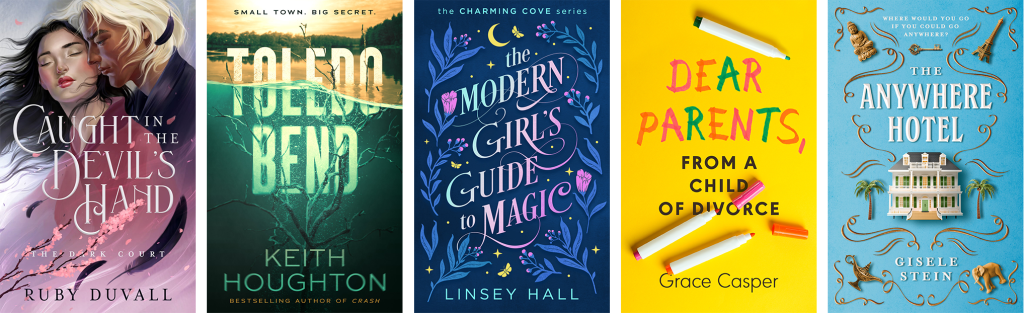
I thought I had a post about book cover design up on this blog but can’t find it – for those that don’t know, I was a book editor and book cover designer while getting my PhD in Literature. I pivoted to writing my own fiction and nonfiction book while helping indie authors publish and market their books, so I have a sprawling mess of websites and publishing services that haven’t been updated in years.
Short answer: you can make a book cover yourself with a template and stock images, generate one with AI, or hire a designer. Which route you pick comes down to your genre and your budget, and the tips below cover the parts people get wrong.
Template, AI or designer: which route fits
Route
Works when
Watch out for
Template and stock images
You know what you are doing and can mash up stock images and pick the right font.
It is risky to DIY and get it wrong, so a template and a tutorial help.
AI
You want exactly what you have in mind without an illustrator or a designer.
Fonts and layout still matter, and you may need a designer to put together the spine and back covers.
Designer
You want someone who knows what sells in your genre.
The average cost is around $350 to $550. With Fiverr or cheap sites it is hard to know if they are using AI or commercial fonts.
What makes a cover look amateur
Treating the cover as a creative project when it is packaging: it is your book’s advertising.
Choosing fonts carelessly or laying them out without care.
Spine and back cover that are not sized correctly to work on KDP.
Five simple tips for book cover design
But just in case you’re looking for book cover design, here are some very simple tips to make sure you do it right.
#1 – your book is advertising. It’s not a creative thing: it’s packaging. You need the best thing you can get because it’s going to make the biggest difference in all of your marketing and promotional efforts. Without a good one, your book will fail.
#2 – you don’t need a book cover designer. By which I means, it’s possible to mashup some stock images together and choose the right font. I’ve designed all my own covers, but I know what I’m doing. It’s risky to DIY and get it wrong, so I built a bunch of tutorials and templates about book cover design, even a free guide, and all that stuff is at www.diybookcovers.com.
#3 – AI for book cover design. AI is scary for most artists, but it does allow authors to finally get exactly what they have in mind, without hiring an illustrator or working with a book cover designer. I have a few articles on AI for book cover design. For me, I want the absolute best image, that sells more story and communicates my genre. I have access to stock photos and photoshop, and I know how to use it… but I’ll always pick the art that sells the most books.
#4 – typography for book cover design. That said, choosing fonts is really important, as is laying them out professionally. There are tools that can already handle the text, but you may need a designer to put together the spine and back covers, which can get a lot trickier because they need to be sized correctly to work on KDP.
You want to pick someone who knows what will sell in your genre, so check out their examples and make sure they can do something great. The average cost for book cover design is around $350 to $550, but that can vary a bit. Beware of Fiverr or cheap sites – you may find a good deal but it’s hard to know if they are using AI or commercial fonts, etc.
Whether you do it yourself or get help, the cover really is hugely important so I hope these resources help! I redo my own covers all the time, I’m pretty messy with it, but I want to make sure conversion justifies ad costs and a slightly better cover often makes all the difference.
One more thing: if you write YA fantasy or paranormal romance, look at what’s already selling in your niche before you design anything. The YA mermaid romance books and fallen angel romances lists on this site are a quick way to see what readers in those genres expect.
This is a free A to Z dictionary of Greek and Norse mythology, plus Japanese, Egyptian, Slavic and other myths: gods, monsters, objects and places, each defined in a line or two so you can look a name up fast.
I was reading Plato in middle school, and become so obsessed with Greek mythology I got a PhD in Comparative Literature… but that was a long time ago, when I was a poor grad student learning to write ancient Greek and Chinese characters by hand at the train station.
Now I write novels, and it’s super rewarding – especially when I get to base my stories on classic Greek mythology. My books go deep on more obscure myths from world folklore, but I hope to share my passion for these characters by creating a new series featuring lore, legends and fan art from each ancient god, goddess, demigod, supernatural creature or demon, much like this overview of Roman mythology…
For now, start with free dictionary of mythology, organized by region/culture. It’s quick cheatsheet and will be very cool once I add art.
Greek Mythology
Zeus (Zues): The king of the gods, ruler of Mount Olympus, and god of the sky, lightning, thunder, and law.
Athena: Goddess of wisdom, courage, inspiration, and warfare.
Aphrodite: Goddess of love and beauty.
Ares: God of war.
Artemis: Goddess of the hunt, wilderness, and childbirth.
Atlas: Titan condemned to hold up the sky for eternity.
Eros: God of love and desire.
Hekate (Hecate): Goddess of magic, witchcraft, and crossroads.
Scylla: A monstrous sea nymph turned into a creature with six dog heads.
Hades: God of the underworld.
Persephone: Queen of the underworld, wife of Hades, and goddess of spring growth.
Dionysus: God of wine, pleasure, and festivity.
Minotaur: A creature with the head of a bull and the body of a man, confined to the Labyrinth in Crete.
Hephaestus: God of metalworking and craftsmanship.
Ares: God of war.
Hydra: A multi-headed serpent that regrows its heads when cut off.
Hera: Queen of the gods and goddess of marriage and childbirth.
Aeolus: Keeper of the winds.
Basilisc: A serpent or dragon known to kill with its gaze.
Adonis: A youth loved by both Aphrodite and Persephone.
Daphne: A nymph who was turned into a laurel tree to escape Apollo’s advances.
Cerberus: The three-headed dog guarding the gates of the underworld.
Morpheus: God of dreams.
Centaur: A creature with the upper body of a human and the lower body of a horse.
Nemesis: Goddess of retribution.
Nymph: Minor nature goddesses.
Chimera: A creature with parts from different animals, often lion, goat, and serpent.
Hestia: Goddess of the hearth and home.
Helios: Titan god of the sun.
Medusa: Once a beautiful woman, Medusa was cursed with snake hair and a gaze that turns anyone to stone.
Erinyes: Deities of vengeance.
Echidna: Mother of monsters and half-woman, half-snake.
Hyperion: Titan of heavenly light.
Sirens: Creatures that lured sailors with their enchanting music.
Nyx: Primordial goddess of the night.
Prometheus: Titan who defied Zeus to bring fire to humanity.
Thanatos: God of death.
Perseus: A hero known for beheading Medusa.
Gorgon: Three sisters, including Medusa, known for their petrifying gaze.
Manticore: A creature with the body of a lion, wings of a bat, and the face of a man.
Rhea: Titaness and mother of many Olympian gods.
Harpy: A creature with the body of a bird and the head of a woman.
Poisedon (Poseidon): God of the sea.
Satyr: Creatures with human upper bodies and the legs of goats.
Thalia: Muse of comedy and pastoral poetry.
Priapus: Minor god of fertility.
Maia: One of the Pleiades and mother to Hermes.
Psyche: Mortal woman who became the wife of Eros.
Io: Mortal woman and lover of Zeus, turned into a cow to hide her from Hera.
Lamia: A woman turned into a child-eating monster.
Chiron: The wisest of all centaurs.
Japanese Mythology
Shinto God of War: There isn’t one specific god of war in Shinto mythology, but several kami (deities) have martial attributes. One example is Hachiman, the god of war and archery.
Shinigami: Spirits associated with death, similar in nature to the Western Grim Reaper, though they can be plural.
Qilin: While Qilin is often associated with Chinese mythology, it’s known in Japan as “Kirin.” It’s a mythical hooved chimerical creature known throughout various East Asian cultures.
Egyptian Mythology
God of Death: Anubis, god of mummification and afterlife. He has a jackal’s head and is known for guiding souls in the underworld.
Eye of Horus: An ancient Egyptian symbol of protection, royal power, and good health.
Osiris: God of the afterlife, death, and resurrection.
Ankhesenamun: Wife of the famous Pharaoh Tutankhamun, not a goddess but a significant figure in Egyptian history.
Ashera: Often associated with Canaanite mythology rather than Egyptian. Asherah is a mother goddess.
Norse Mythology
Sakaar: It’s not from Norse mythology but a fictional planet from the Marvel Universe. However, Thor, a Norse god, is featured there in the Marvel adaptations.
Jormungandr: The Midgard Serpent, a sea serpent so large it can encircle the world.
Asgard: The heavenly realm where the Aesir tribe of deities resides.
Freya: Goddess associated with love, beauty, fertility, and war.
Mimir: A being known for his knowledge and wisdom.
Helm of Awe: A symbol of protection and might, but also of the power to achieve one’s aims.
Ragnarok: The series of events that will bring about the end of the world, where gods, giants, and creatures will perish in battle.
Valknut: A symbol associated with the god Odin, death, and the afterlife.
Niflheim: One of the Nine Worlds, a place of ice, cold, and mist.
Slavic Mythology
Baba Yaga: A witch-like character who flies around in a mortar, wielding a pestle. She can be malevolent or benevolent, depending on specific tales.
Koschei: Often known as Koschei the Deathless, he’s a powerful and evil figure associated with a particular tale of kidnapping the hero’s wife.
Other Mythologies and Folklore
Medusa (Greek): A gorgon with snakes for hair. Those who look into her eyes turn to stone.
Cleopatra (Historical): Not a mythical figure but the last active ruler of the Ptolemaic Kingdom of Egypt.
Phoenix Bird (Various): A mythical bird that is cyclically regenerated or reborn. Associated with the sun, a phoenix obtains new life by arising from the ashes of its predecessor.
Pied Piper (German Legend): A rat-catcher from Hamelin who lured rats and then children away with his magical pipe.
Emerald Tablets (Alchemy): A text attributed to Hermes Trismegistus and influential on alchemists.
Wendigo (Algonquian folklore): A mythical man-eating creature or evil spirit.
Immurement (Practice): The practice of entombing someone within a structure, where they die from lack of food and water. Not a mythological creature but a dark historical practice.
Enochian (Magical system): A system of ceremonial magic centered on the evocation and commanding of spirits. It’s based on the 16th-century writings of John Dee and Edward Kelley.
Oshun (Yoruba): A goddess of love, beauty, wealth, and divine order.
Baron Samedi (Vodou): One of the Loa of Haitian Vodou, Baron Samedi is the loa of the dead.
Seal of Solomon: A magical signet ring attributed to King Solomon in medieval Islamic tradition, later also in Jewish and Western occultism.
Charybdis (Greek): A sea monster or whirlpool that threatens sailors.
Faerie (Celtic): Mythological creatures or spirits, often described as metaphysical, supernatural, or preternatural.
Jian Shi (Jiangshi, Chinese): Also known as a hopping vampire or hopping corpse, it’s a reanimated corpse in Chinese legends and folklore.
Lilith (Jewish folklore): Often associated with the mythological female demon, later folklore portrays Lilith as Adam’s first wife.
Greek Fire (Byzantine Empire): Not a myth but a weapon. It was a technological invention of the Byzantine Empire, an incendiary weapon used in naval warfare.
Aztlan (Aztec): The ancestral home of the Nahua tribes, believed to be an island.
Tiamat (Babylonian): A chaos monster, a primordial goddess of the ocean.
Jacob’s Ladder (Biblical): A ladder to heaven that the biblical Patriarch Jacob dreams about.
Centurion (Roman): Not mythical, but historical. A centurion was a professional officer in the Roman army.
Fertility Goddess (Various): A goddess that represents fertility and motherhood. Examples include Isis from Egyptian mythology and Freyja from Norse mythology.
Aluxe (Mayan): Also known as Alux, these are spirits of the forest in Mayan tradition.
Manananggal (Philippine folklore): A creature known to sever its upper torso to fly at night and suck the blood from sleeping victims.
Hatshepsut (Historical): A female pharaoh of the Eighteenth Dynasty of Egypt.
Kratos (Greek): Represents strength and might, but notably, the God of War video games depict Kratos in a narrative that is not traditional to ancient myths.
Orichalcum: A metal mentioned in several ancient writings, most famously in the story of Atlantis as described by Plato.
Fiji Mermaid: A common feature of sideshows, it’s an object comprising the torso and head of a juvenile monkey sewn to the back half of a fish.
Lovelock Cave: An archaeological site in Nevada, not a myth but has ties to Paiute Native American legends.
Ark of the Covenant: A gold-covered wooden chest described in the Book of Exodus that contains the two stone tablets of the Ten Commandments.
Vajra (Buddhist): A ritual object symbolizing both the properties of a diamond (indestructibility) and a thunderbolt (irresistible force).
This is a list of the best ebook devices for 2023, but I got super carried away with the “scifi” theme…
Attention, sci-fi aficionados! Just picture it – you’re about to embark on a galaxy-hopping escapade, or traverse the vertigo-inducing multiverse. But wait! These aren’t merely the next chapters in your favorite space odyssey. This is a call to transport your riveting narrative experiences into a realm of pixel precision and electronic elegance. This is a journey of transitioning from the familiar rustle of aged pages to the crystal clarity of e-ink. Welcome to the expansive universe of e-readers.
In this digital age, the once stark contrast between paper and pixel seems to blur more with each passing moment. E-readers have burst onto the contemporary scene in all their sleek, portable, and high-tech glory, no less enticing than a gleaming spaceship in the heart of a sci-fi epic. These devices promise a reading adventure that’s immersive yet comfortable, traditional yet refreshingly modern.
Whether you’re plunging into the fluctuating realities of Philip K. Dick or exploring the dystopian alleys of Orwell’s creation, e-readers ensure every word, every alien character, is delivered in pristine quality. From eye-soothing displays that mimic the charm of physical print to dazzling features like adjustable fonts, night modes, on-the-go libraries, and much more, these devices are the chrono-jumpers of the reading realm.
Ready to feel the pulse of outer-worldly narratives reverberating through a cutting-edge e-reader? Well then, it’s time to embark on this captivating exploration of the best e-reading devices in the galaxy. Let’s journey from the world of classic ten-finger page flipping to the cosmic ease of single-finger page swiping on sleek screens. Prepare yourself for an era where your entire library dwells comfortably within the universe of a single device. Let’s embrace the merging of the past and the future that e-readers represent, and dive into narratives in a way like never before. Buckle up, it’s time we leaped into the digital unknown.
The Best Digital Companions for Your Interstellar Adventures
Reading science fiction is all about embarking on endless adventures across the universe. Yet, wouldn’t it only be fair if the device you’re reading these tales on, would match up to the futuristic narrative of the books? Here’s a curated list of top-notch e-readers available today, devices that will transport you right into the thick of your next sci-fi odyssey.
1. Amazon Kindle Oasis
Priced at $249.99, Amazon’s Kindle Oasis is the epitome of e-reading luxury. Its ergonomic design focuses on comfort, showcasing a thin and lightweight design that you can hold effortlessly for hours. The adjustable warm light feature gives your eyes the care they deserve while you traverse the gallows of Dystopia or race through the space-time continuum. Another worthy aspect is its notable waterproof feature, enabling you to continue your reading adventures even on a rainy day or by the beachside. Experience this blend of comfort and sophistication here.
2. Kobo Clara HD
The Kobo Clara HD, priced at $119.99, is what your wildest dreams of a perfect budget e-reader look like. A high-resolution 300 PPI display makes every alien symbol look crisp. The ComfortLight Pro technology adjusts the screen light according to the time of day, ensuring your eyes never strain while decoding some alien language or maneuvering through the cosmos. Plunge into this budget-friendly yet top-quality e-reading experience here.
3. Barnes & Noble NOOK GlowLight 3
Designed with dedicated e-readers in mind, the NOOK GlowLight 3 ( $119.99) boasts a soft-touch finish that’s comfortable to hold for long reading sessions. With an impressive 300 PPI display and an adaptive night mode that reduces blue light emission, your interplanetary explorations will be a treat for your eyes. This e-reader is a refuge for your sci-fi adventures, accessible here.
4. Onyx Boox Nova 3
The Onyx Boox Nova 3, priced at $329.99, is the powerhouse among e-readers. Powered by an octa-core processor, this device covers all your multitasking needs, whether it’s opening multiple science fiction novels or taking quick notes about your favorite character. Its high-resolution display supports stylus input, allowing you to highlight words or jot down thoughts without ever leaving your page. Check out this multifaceted e-reading companion here.
5. Pocketbook InkPad 3
Priced at $209, the Pocketbook InkPad 3 redefines the boundaries of e-reading comfort. It’s aesthetically pleasing, featuring a 7.8 -inch E Ink Carta HD touchscreen that provides the perfect stage for even the most complex galactic battles to unfold. With a built-in audio jack, it’s perfect for immersing yourself entirely in your sci-fi world while listening to your favorite music or even audiobooks. Dive into this audio-visual reading experience here.
Each of these e-readers provides a unique and captivating reading experience, much like the science fiction books they hold within them. They not only make reading more enjoyable but also echo the technological advancements we often read about in these captivating tales. Choose the one that best suits your reading style and prepare for an epic journey through time and space.